
The International Energy Agency (IEA) has released its latest Global EV Outlook, forecasting that electric car sales will hit 23 million units in 2026. That would represent close to 30% of all new passenger vehicles sold globally — a landmark threshold that would have seemed ambitious just a few years ago.
The 2026 projection follows a strong 2025, when global EV sales surpassed 20 million for the first time, marking a 20% year-over-year increase. For context, that means one in every four new cars sold worldwide last year was electric — a ratio that continues to climb despite broader economic headwinds and concerns about a potential slowdown.
Growth is being driven primarily by China, where EV adoption has become mainstream, alongside expanding markets in the European Union and the United States. Policy frameworks such as the EU's 2035 combustion engine phase-out and various national purchase incentives continue to support demand across different income brackets.
The IEA's findings suggest that fears of a significant market slowdown have not materialized into a structural reversal. Instead, the sector appears to be consolidating its gains, with falling battery costs and an increasingly competitive model lineup making electric vehicles more accessible to mainstream buyers globally.
Source: IEA: Global EV sales headed for another record year despite the slowdown - Electrek· Based on source, with AI-assisted rewriting.
Related articles
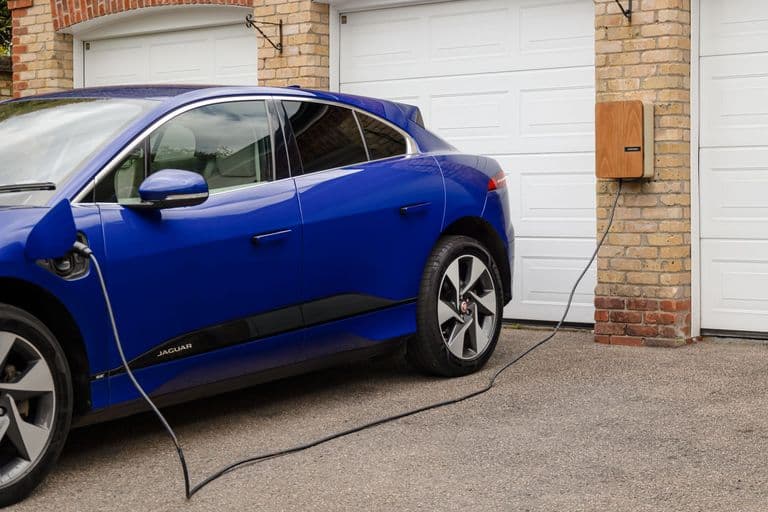
EV in Winter: Range Loss, Home Charging and Preheating
Cold weather can noticeably shrink an electric car's range, as sluggish battery chemistry and cabin heating both draw on the same pack. Preconditioning while plugged in, gentle overnight AC charging and smart timing in a solar-equipped home recover much of that loss. Here is what to expect and how to fit your EV into your home energy setup.
Dutch grid jams force homeowners to delay heat pumps and EV chargers
Thousands of Dutch homeowners are being told to put their heat pump installations and EV charging plans on hold as electricity grid congestion reaches critical levels. The Dutch case is a warning signal for the rest of Europe about the limits of aging grid infrastructure.
GM bets on sodium-ion storage and V2G at home
At its June 2026 Empower event in San Francisco, GM announced US-developed sodium-ion grid-scale battery storage and software-enabled V2G for existing EV owners — two moves that could reshape how homes and grids store renewable energy.
150 Power Plants: The Hidden Grid Cost of Weakening EU EV Targets
Scaling back the EU's electric vehicle targets could force Europe to build the equivalent of 150 new power plants just to keep the electricity grid balanced. EVs aren't just cars — as mobile battery storage, they are a critical and low-cost tool for integrating solar and wind energy into the grid.
Comments
0 commentsBe the first to comment.