
BYD is pushing hard on multiple technology fronts at once. The Chinese electric vehicle manufacturer has now revealed a powerful in-house developed chip designed to support Level 3 and Level 4 autonomous driving — meaning the vehicle can handle most or all driving tasks without human intervention under defined conditions.
What is God's Eye?
God's Eye is BYD's umbrella brand for its advanced driver-assistance and autonomous driving platform, developed in-house and progressively rolled out across its model range. By designing its own chip, BYD reduces its reliance on third-party semiconductor suppliers — a strategic move that mirrors what Tesla achieved with its own Full Self-Driving hardware.
The significance of Level 3 and Level 4 autonomy should not be understated. Level 3 allows the driver to take their attention off the road under specific conditions, while Level 4 means the car can handle entire trips without human input in defined operational domains. Regulatory approval for these levels is still progressing in the EU and other major markets, but having the hardware ready puts BYD ahead of the curve.
For international buyers and fleet operators watching the EV market, BYD's vertically integrated approach — combining battery technology, charging speed innovation, and now autonomous driving silicon — signals that the company is positioning itself as a full-stack mobility technology provider, not just a car manufacturer.
Source: Under “God’s eye:” BYD unveils the next generation of its self-driving tech - The Driven· Based on source, with AI-assisted rewriting.
Related articles
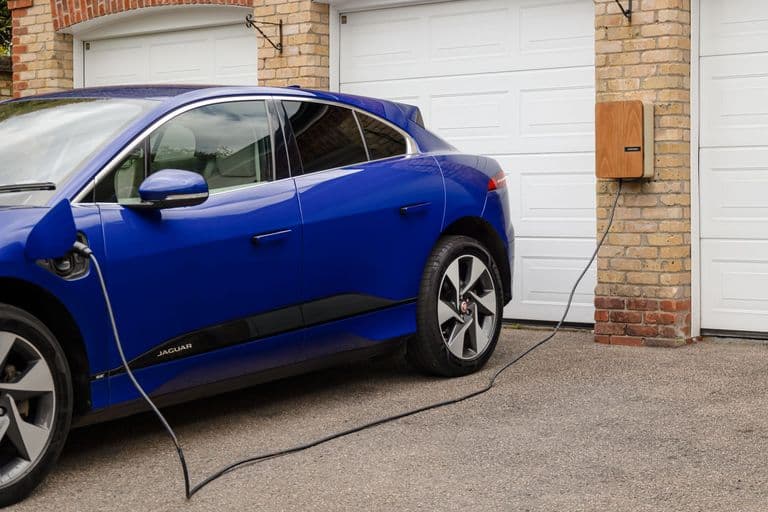
EV in Winter: Range Loss, Home Charging and Preheating
Cold weather can noticeably shrink an electric car's range, as sluggish battery chemistry and cabin heating both draw on the same pack. Preconditioning while plugged in, gentle overnight AC charging and smart timing in a solar-equipped home recover much of that loss. Here is what to expect and how to fit your EV into your home energy setup.
Dutch grid jams force homeowners to delay heat pumps and EV chargers
Thousands of Dutch homeowners are being told to put their heat pump installations and EV charging plans on hold as electricity grid congestion reaches critical levels. The Dutch case is a warning signal for the rest of Europe about the limits of aging grid infrastructure.
GM bets on sodium-ion storage and V2G at home
At its June 2026 Empower event in San Francisco, GM announced US-developed sodium-ion grid-scale battery storage and software-enabled V2G for existing EV owners — two moves that could reshape how homes and grids store renewable energy.
150 Power Plants: The Hidden Grid Cost of Weakening EU EV Targets
Scaling back the EU's electric vehicle targets could force Europe to build the equivalent of 150 new power plants just to keep the electricity grid balanced. EVs aren't just cars — as mobile battery storage, they are a critical and low-cost tool for integrating solar and wind energy into the grid.
Comments
0 commentsBe the first to comment.