
Coca-Cola's Canadian operations have crossed a significant milestone in commercial fleet electrification: the company now runs more than forty Volvo VNR Electric semi-trucks in its bright red livery. The expansion has happened largely under the radar, contrasting sharply with the media buzz surrounding rival Pepsi's high-profile Tesla Semi deployment.
The Volvo VNR Electric is a Class 8 battery-electric semi designed for regional distribution routes, offering a range of up to approximately 250 miles (400 km) on a single charge. It is powered by up to six battery packs and features Volvo's proven powertrain technology adapted for North American logistics operations.
The Coca-Cola–Volvo partnership underscores an important truth emerging in the commercial EV market: there is no single path to fleet decarbonization. While Tesla dominates consumer EV headlines, European manufacturers like Volvo are quietly winning significant contracts in the heavy-duty segment, particularly for companies prioritizing reliability and established service networks.
For the broader logistics and fast-moving consumer goods (FMCG) industry, this fleet milestone sends a clear signal. With tightening emissions regulations in both the EU and North America — including the EPA's Phase 3 greenhouse gas rules — large operators are beginning to make electrification commitments at scale, and forty-plus trucks is no longer just a pilot program.
Source: Volvo electric semi scores another real-world win with Coca-Cola - Electrek· Based on source, with AI-assisted rewriting.
Related articles
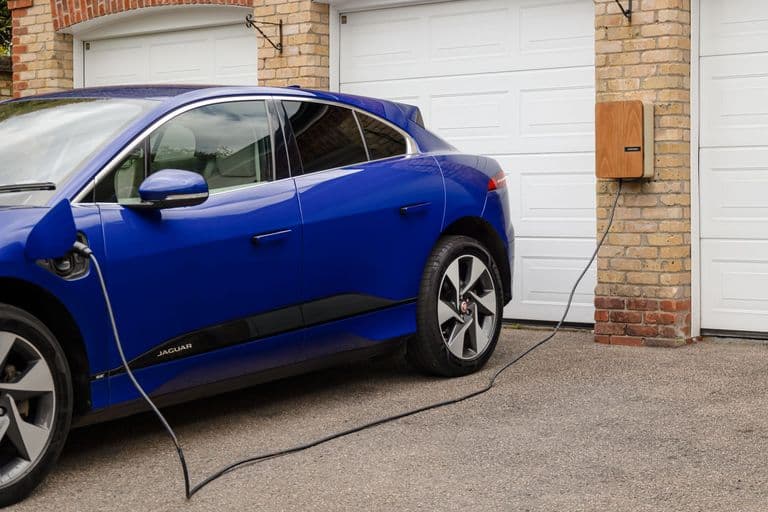
EV in Winter: Range Loss, Home Charging and Preheating
Cold weather can noticeably shrink an electric car's range, as sluggish battery chemistry and cabin heating both draw on the same pack. Preconditioning while plugged in, gentle overnight AC charging and smart timing in a solar-equipped home recover much of that loss. Here is what to expect and how to fit your EV into your home energy setup.
Dutch grid jams force homeowners to delay heat pumps and EV chargers
Thousands of Dutch homeowners are being told to put their heat pump installations and EV charging plans on hold as electricity grid congestion reaches critical levels. The Dutch case is a warning signal for the rest of Europe about the limits of aging grid infrastructure.
GM bets on sodium-ion storage and V2G at home
At its June 2026 Empower event in San Francisco, GM announced US-developed sodium-ion grid-scale battery storage and software-enabled V2G for existing EV owners — two moves that could reshape how homes and grids store renewable energy.
150 Power Plants: The Hidden Grid Cost of Weakening EU EV Targets
Scaling back the EU's electric vehicle targets could force Europe to build the equivalent of 150 new power plants just to keep the electricity grid balanced. EVs aren't just cars — as mobile battery storage, they are a critical and low-cost tool for integrating solar and wind energy into the grid.
Comments
0 commentsBe the first to comment.