
On Friday, November 6, 2026, Elon Musk wrote on X that Tesla will wind down Cybertruck production at its Texas Gigafactory around mid-2027. He said the move would make room for expanded production of the Cybercab, the company's robotaxi without a steering wheel or pedals. According to the capacity table in Tesla's third-quarter 2026 report, Texas is the Cybertruck's only production site, and CNBC notes that the plant also builds the Model Y. Musk chose wording that points to a gradual wind-down, stopped short of announcing a full halt, and did not say whether the pickup could continue to be built at another plant. When one user called the decision the end of an era, he replied that this was true, but that the Cybertruck fleet would be with us for a long time.
How far did the Cybertruck fall short of its 250,000-a-year goal?
Before the Cybertruck went on sale, Musk predicted that annual sales would eventually reach 250,000 units, and Tesla also designed the production line for 250,000 vehicles a year. Deliveries began in late 2023, and the third-quarter capacity table lists installed capacity of more than 125,000 units a year in Texas. Because Tesla does not report sales by model, estimates from market researchers are the best guide: according to Cox Automotive, 20,237 Cybertrucks were sold in the United States in 2025, 48 percent fewer than in 2024, when 38,965 found buyers. Kelley Blue Book data show that US sales fell by a further 28 percent between January and September 2026 compared with the same period a year earlier. A Cox estimate cited by Electrek puts US Cybertruck sales at 3,519 in the first quarter of 2026 and 3,744 in the second.
In Tesla's own report, the Cybertruck is grouped with the Model S, the Model X and the Semi truck in the other models category, in which the company produced 7,004 vehicles and delivered 8,295 in the third quarter of 2026. According to Electrek, that delivery figure is 48 percent lower than a year earlier and the lowest since the second quarter of 2021. Because, as the outlet reports, Model S and Model X production ended in April 2026, Electrek estimates that 7,000 to 8,000 of those deliveries may have been Cybertrucks, an annualized pace of roughly 30,000 units. By the outlet's calculation, that is about 10 to 12 percent of the original 250,000-a-year plan and roughly a quarter of installed capacity. Electrek also estimates that Tesla has delivered around 70,000 Cybertrucks in total over roughly three years; these are not official figures but the outlet's own editorial estimates.
Prices have risen in the meantime: Electrek reported that overnight on August 24, 2026, Tesla raised the price of two versions by $5,000, taking the Dual Motor AWD from $69,990 to $74,990 and the Premium AWD from $79,990 to $84,990, while the Cyberbeast stayed at $99,990. Citing records from the National Highway Traffic Safety Administration (NHTSA), CNBC reports that the 2024 model year has been subject to 11 voluntary recalls, including for unintended acceleration caused by a stuck accelerator pedal, software faults and an inverter failure causing a sudden loss of drive power. Musk's own companies have also shown up among the buyers: according to a SpaceX filing cited by CNBC, SpaceX bought $131 million worth of Cybertrucks in 2025, at Tesla's suggested retail price. Citing S&P Global Mobility data, Electrek writes that in the fourth quarter of 2025 SpaceX bought 1,279 Cybertrucks and Musk's companies 1,339 in total, roughly 19 percent of all Cybertrucks registered in the United States that quarter. According to the outlet, Tesla halted Cybertruck sales in Australia and New Zealand around October 23, 2026, and the pickup is not officially sold in Europe.
What is the Tesla Cybercab, and where is it already carrying riders?
The Cybercab is a two-seater with no permanently installed conventional controls: it has no brake pedal, no accelerator pedal and no steering wheel, and no mirrors either. Tesla began carrying passengers commercially in Austin with a small number of Cybercabs on September 3, 2026, and according to an NHTSA document it said it would gradually expand to more vehicles and locations. Electrek reports that 463 Cybercabs had been registered in Texas by the end of October, and the third-quarter capacity table lists the model as in production, with annual capacity of more than 125,000 units. According to Tesla, its robotaxi service as a whole had logged a cumulative total of nearly 2 million unsupervised miles by the end of the third quarter. TechCrunch pointed out, however, that in this report the company swapped its earlier metric, which tracked paid robotaxi miles, for this one, which also counts trips without passengers, and that its reading of the second-quarter chart showed a 36 percent drop in paid miles from the first quarter.
According to TechCrunch, Tesla said on its October 21 investor call that it plans to begin the Cybercab's expansion in Dallas in November 2026 and extend it to more cities by the end of the year. The company also intends to start selling the Cybercab to fleet operators by the end of 2026. For now these are promises: as of November 6, there was no official date for the Cybercab launch in Dallas. On the same call, Musk said the robotaxi business would not be noticeable in Tesla's financial results until the second quarter of 2027, but could become a big deal in the third or fourth quarter of 2027. The signaled timing for winding down Cybertruck production in Texas, mid-2027, therefore roughly coincides with the period for which Musk projected a meaningful financial impact from the robotaxi business.
What is NHTSA examining in the Cybercab's certification?
On September 3, 2026, the day Cybercab rides began in Austin, the NHTSA Office of Defects Investigation (ODI) opened an audit query, numbered AQ26002, into the Cybercab's federal safety certification on the basis of publicly available information. Tesla told the agency that the vehicle complies with all applicable Federal Motor Vehicle Safety Standards (FMVSS), and the agency is examining, among other things, to what extent that certification rested on Tesla's position that certain requirements do not apply to the Cybercab. NHTSA estimates the population of vehicles involved at 1,000. The audit is not a recall and does not mean that any violation has been found; the matter would become more serious if the agency upgraded it to a preliminary evaluation or an engineering analysis.
Several questions remain open after the announcement: Tesla has not said how long it will keep selling Cybertruck inventory or what will happen to parts supply and service for existing owners, and it did not immediately respond to a request for comment from CNBC. In the short term, the first yardstick will be whether the Cybercab launches in Dallas in November; in the longer term, it will be how NHTSA closes audit query AQ26002. As of November 2026, the announcement signals that at its Texas factory Tesla is giving priority to a robotaxi without a steering wheel over a conventional, human-driven pickup.
Related articles
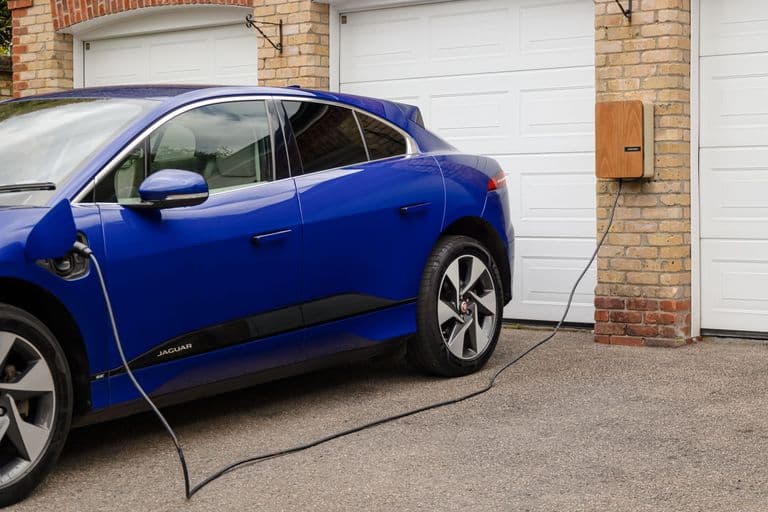
EV in Winter: Range Loss, Home Charging and Preheating
Cold weather can noticeably shrink an electric car's range, as sluggish battery chemistry and cabin heating both draw on the same pack. Preconditioning while plugged in, gentle overnight AC charging and smart timing in a solar-equipped home recover much of that loss. Here is what to expect and how to fit your EV into your home energy setup.
Dutch grid jams force homeowners to delay heat pumps and EV chargers
Thousands of Dutch homeowners are being told to put their heat pump installations and EV charging plans on hold as electricity grid congestion reaches critical levels. The Dutch case is a warning signal for the rest of Europe about the limits of aging grid infrastructure.
GM bets on sodium-ion storage and V2G at home
At its June 2026 Empower event in San Francisco, GM announced US-developed sodium-ion grid-scale battery storage and software-enabled V2G for existing EV owners — two moves that could reshape how homes and grids store renewable energy.
150 Power Plants: The Hidden Grid Cost of Weakening EU EV Targets
Scaling back the EU's electric vehicle targets could force Europe to build the equivalent of 150 new power plants just to keep the electricity grid balanced. EVs aren't just cars — as mobile battery storage, they are a critical and low-cost tool for integrating solar and wind energy into the grid.
Comments
0 commentsBe the first to comment.