
A Beijing court convened the first hearing in late May 2026 for a consumer fraud lawsuit targeting Tesla's 'Full Self-Driving' software. The case, originally filed in September 2025 with seven plaintiffs, has grown to ten owners who collectively demand more than 3.95 million yuan — approximately $583,000 — in compensation. This represents China's first coordinated legal action challenging the promises Tesla made around its FSD driver-assistance technology.
What the plaintiffs claim
The owners argue that Tesla's branding and marketing materials misrepresented the actual capabilities of FSD, implying a level of autonomous driving that the software does not deliver. In China, FSD operates under a different regulatory framework than in North America or Europe, and Chinese authorities have been notably strict about how autonomous and semi-autonomous features may be named and advertised.
The case carries significant industry implications. A ruling in favor of the plaintiffs could set a precedent that forces automakers — not just Tesla — to more precisely describe the limits of their advanced driver-assistance systems (ADAS) in Chinese marketing.
Broader context for EV buyers
For international EV buyers, this case is a reminder that software feature naming can itself become a legal liability. Regulators in the EU have also been scrutinizing ADAS nomenclature, and a landmark Chinese verdict could amplify pressure on Tesla and peers to align product descriptions with real-world performance globally.
Source: Tesla’s ‘Full Self-Driving’ fraud lawsuit gets first hearing in China — 10 owners seek $583K - Electrek· Based on source, with AI-assisted rewriting.
Related articles
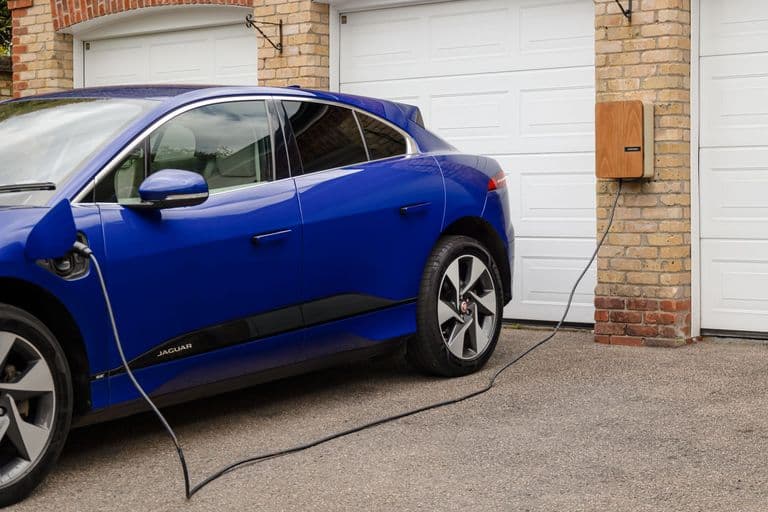
EV in Winter: Range Loss, Home Charging and Preheating
Cold weather can noticeably shrink an electric car's range, as sluggish battery chemistry and cabin heating both draw on the same pack. Preconditioning while plugged in, gentle overnight AC charging and smart timing in a solar-equipped home recover much of that loss. Here is what to expect and how to fit your EV into your home energy setup.
Dutch grid jams force homeowners to delay heat pumps and EV chargers
Thousands of Dutch homeowners are being told to put their heat pump installations and EV charging plans on hold as electricity grid congestion reaches critical levels. The Dutch case is a warning signal for the rest of Europe about the limits of aging grid infrastructure.
GM bets on sodium-ion storage and V2G at home
At its June 2026 Empower event in San Francisco, GM announced US-developed sodium-ion grid-scale battery storage and software-enabled V2G for existing EV owners — two moves that could reshape how homes and grids store renewable energy.
150 Power Plants: The Hidden Grid Cost of Weakening EU EV Targets
Scaling back the EU's electric vehicle targets could force Europe to build the equivalent of 150 new power plants just to keep the electricity grid balanced. EVs aren't just cars — as mobile battery storage, they are a critical and low-cost tool for integrating solar and wind energy into the grid.
Comments
0 commentsBe the first to comment.