
At a time when US federal EV mandates have been rolled back and several automakers are quietly shelving electric vehicle programs, Toyota is doing the opposite. Four new battery-electric models — the bZ, C-HR EV, bZ Woodland, and Highlander EV — are headed to American showrooms, with two additional Lexus EVs rounding out the lineup. Industry observers, from brand executives to automotive journalists, are asking the same question: why now?
The answer lies in a commitment Toyota made public in December 2021, when it announced a $35 billion investment to develop a full range of EVs, with a target of 30 battery-electric models globally by 2030. Not all of those will reach North America — many are designed for emerging markets in Asia and Latin America — but the US lineup is the direct result of that years-long plan. To support local production, Toyota is building the electric Highlander at its massive Georgetown, Kentucky plant, with battery cells supplied by a new North Carolina facility representing a total investment of $13.9 billion, capable of serving hybrids, plug-in hybrids, and full EVs alike.
Toyota's approach is defined by patience and relentless refinement — what the Japanese call kaizen. The 2022 bZ4X, its first US EV, was imperfect: slow charging speeds and limited driver information were common complaints. Four years of iteration produced a dramatically improved vehicle. The same trajectory played out with the Prius: the 1997 original was slow and clunky; today's hybrids are benchmark products. As Telemetry analyst Sam Abuelsamid told The Detroit News, 'Toyota is not often the first to market with a new technology. But they take their time. They try to do it right.'
The Subaru partnership amplifies Toyota's volume and helps spread development costs. Toyota owns 20% of Subaru, and all four new Toyota EVs will be sold in parallel under Subaru nameplates — mirroring the bZ4X/Solterra model, where Toyota moved 45,000 units and Subaru added 32,000 more over three model years. In the US, Subaru's buyer base — environmentally conscious, practical, and outdoors-oriented — overlaps strongly with early EV adopters.
Ultimately, Toyota's decision to push forward with EVs in a politically uncertain US market reads less like a gamble and more like validation of the broader EV transition itself. Its closest competitive concern isn't GM or Volkswagen — it's Hyundai, which continues to iterate rapidly on its own EV lineup. Toyota is playing the long game, and history suggests it usually wins when it does.
Source: As other automakers retrench, Toyota has four new EVs in the works - Charged EVs· Based on source, with AI-assisted rewriting.
Related articles
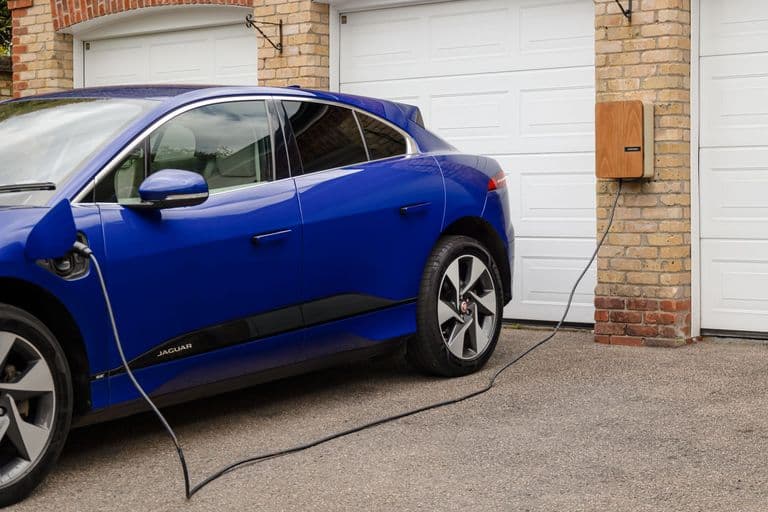
EV in Winter: Range Loss, Home Charging and Preheating
Cold weather can noticeably shrink an electric car's range, as sluggish battery chemistry and cabin heating both draw on the same pack. Preconditioning while plugged in, gentle overnight AC charging and smart timing in a solar-equipped home recover much of that loss. Here is what to expect and how to fit your EV into your home energy setup.
Dutch grid jams force homeowners to delay heat pumps and EV chargers
Thousands of Dutch homeowners are being told to put their heat pump installations and EV charging plans on hold as electricity grid congestion reaches critical levels. The Dutch case is a warning signal for the rest of Europe about the limits of aging grid infrastructure.
GM bets on sodium-ion storage and V2G at home
At its June 2026 Empower event in San Francisco, GM announced US-developed sodium-ion grid-scale battery storage and software-enabled V2G for existing EV owners — two moves that could reshape how homes and grids store renewable energy.
150 Power Plants: The Hidden Grid Cost of Weakening EU EV Targets
Scaling back the EU's electric vehicle targets could force Europe to build the equivalent of 150 new power plants just to keep the electricity grid balanced. EVs aren't just cars — as mobile battery storage, they are a critical and low-cost tool for integrating solar and wind energy into the grid.
Comments
0 commentsBe the first to comment.