
According to the International Energy Agency's (IEA) 2025 Global EV Outlook, the global peak of internal combustion engine (ICE) vehicle sales occurred in 2017 — meaning the decline of fossil-fuel-powered cars is not a future scenario but an already-unfolding reality. Electric vehicle adoption has crossed a structural tipping point, and the transition is now considered irreversible by the agency's analysts.
BYD is taking its global ambitions a step further by building its own dedicated car-carrier fleet. Rather than depending on third-party shipping companies, the Chinese EV giant is investing in purpose-built vessels to transport its vehicles to Europe, South America, and Southeast Asia. This vertical integration gives BYD a significant logistical and cost advantage, allowing it to move faster and more cheaply into new markets.
Legacy automakers — including Volkswagen, Stellantis, and Ford — are increasingly caught in a price war they did not choose. As Chinese EV manufacturers undercut traditional brands on price, Western carmakers are forced to respond with discounts and restructuring. The problem is structural: high labor costs, legacy production lines, and heavy R&D debt make aggressive price competition far more damaging for incumbent brands than for their leaner Asian rivals.
The implications are global. For consumers in the EU, the US, and emerging markets, the intensifying competition means electric vehicles are becoming more affordable faster than many expected. The IEA's 'Peak ICE' milestone is not just a symbolic moment — it is a signal that the economics of transportation are fundamentally shifting toward electrification.
Source: The Driven Podcast: Passing “Peak ICE,” BYD’s export armada, and the legacy price war - The Driven· Based on source, with AI-assisted rewriting.
Related articles
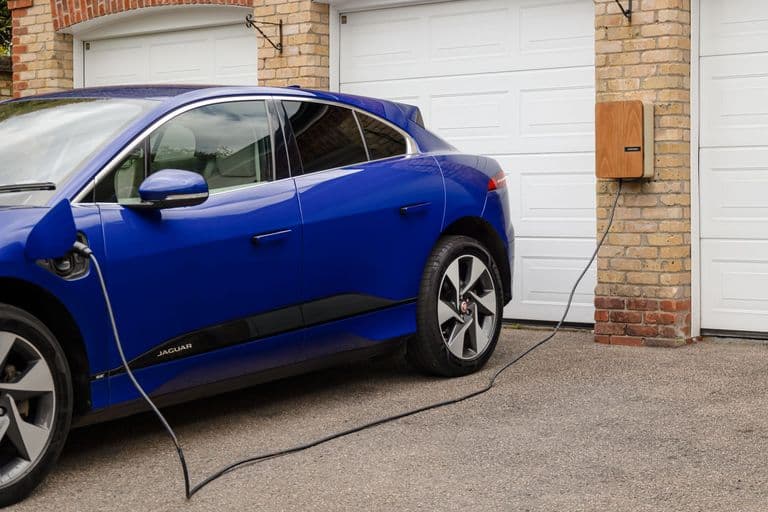
EV in Winter: Range Loss, Home Charging and Preheating
Cold weather can noticeably shrink an electric car's range, as sluggish battery chemistry and cabin heating both draw on the same pack. Preconditioning while plugged in, gentle overnight AC charging and smart timing in a solar-equipped home recover much of that loss. Here is what to expect and how to fit your EV into your home energy setup.
Dutch grid jams force homeowners to delay heat pumps and EV chargers
Thousands of Dutch homeowners are being told to put their heat pump installations and EV charging plans on hold as electricity grid congestion reaches critical levels. The Dutch case is a warning signal for the rest of Europe about the limits of aging grid infrastructure.
GM bets on sodium-ion storage and V2G at home
At its June 2026 Empower event in San Francisco, GM announced US-developed sodium-ion grid-scale battery storage and software-enabled V2G for existing EV owners — two moves that could reshape how homes and grids store renewable energy.
150 Power Plants: The Hidden Grid Cost of Weakening EU EV Targets
Scaling back the EU's electric vehicle targets could force Europe to build the equivalent of 150 new power plants just to keep the electricity grid balanced. EVs aren't just cars — as mobile battery storage, they are a critical and low-cost tool for integrating solar and wind energy into the grid.
Comments
0 commentsBe the first to comment.