
First Bus, one of the UK's largest public transport operators, has begun a smart charging pilot at its electric bus depots. Rather than charging buses at fixed times, the system dynamically coordinates charging sessions to coincide with periods when renewable energy — such as wind and solar — is most abundant on the grid.
The approach addresses one of the central challenges of the energy transition: integrating variable renewable generation without destabilising the grid. By shifting demand to times of surplus clean power, First Bus's depots effectively act as flexible loads that absorb excess electricity which might otherwise be curtailed or wasted.
Electric bus fleets are well-suited to this kind of grid-responsive operation because their daily schedules are predictable and depot dwell times are long enough to allow flexible charging windows. This makes them a valuable tool for transmission system operators (TSOs) seeking to balance supply and demand in real time.
The trial reflects a broader European trend of using EV infrastructure — from private cars to commercial fleets — as active participants in grid management. If successful, the model could be replicated across other UK cities and adopted by operators across the EU, where electrification of public transport is accelerating rapidly.
Source: First Bus uses electric bus depots to support the grid - Electrive (EN)· Based on source, with AI-assisted rewriting.
Related articles
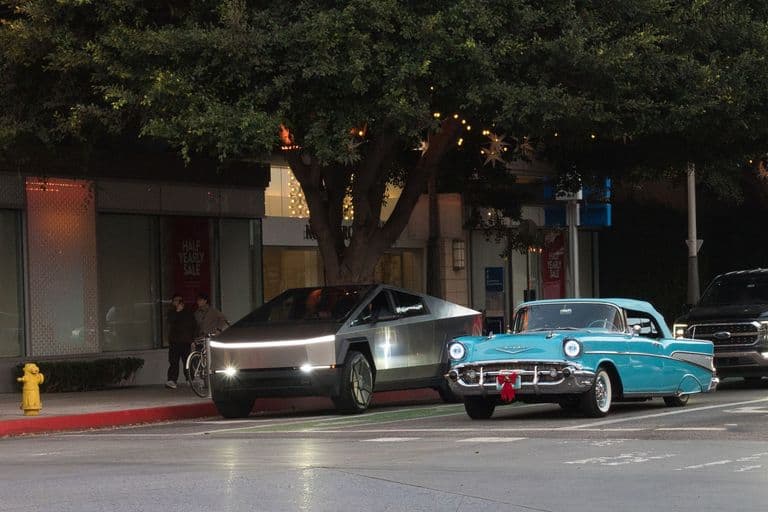
Tesla to wind down Cybertruck production in 2027 for Cybercab
Elon Musk announced on November 6, 2026 that Tesla will wind down Cybertruck production at its Texas Gigafactory around mid-2027, saying the move will free up room for expanded Cybercab production. Sales of the electric pickup have fallen far short of the planned 250,000 a year, while the Cybercab, a robotaxi with no steering wheel or pedals, has been carrying passengers in Austin since September as US safety regulator NHTSA reviews its certification.
GM bets on sodium-ion storage and V2G at home
At its June 2026 Empower event in San Francisco, GM announced US-developed sodium-ion grid-scale battery storage and software-enabled V2G for existing EV owners — two moves that could reshape how homes and grids store renewable energy.
150 Power Plants: The Hidden Grid Cost of Weakening EU EV Targets
Scaling back the EU's electric vehicle targets could force Europe to build the equivalent of 150 new power plants just to keep the electricity grid balanced. EVs aren't just cars — as mobile battery storage, they are a critical and low-cost tool for integrating solar and wind energy into the grid.

Electric Commuter Bikes: What to Look for in an E-Bike
Electric bikes are becoming a serious option for daily urban commuting across Europe. The right e-bike offers programmable assist levels, a reliable battery, and enough versatility to handle varied terrain.
Comments
0 commentsBe the first to comment.