
Hungary's Otthoni Energiatároló Program (OETP), a state subsidy scheme for household battery storage, has seen several developments at once in recent months. Its second application phase has been suspended since mid-March, yet it has been announced that further applicants may receive support on top of the existing winners, and the verification stage for winners opened on 12 October. Anyone who applied in February or March but was not notified of a win, or who had been preparing specifically for the second phase, is right to ask what to expect. Drawing on the official documents and press reports available at the time of writing, at the end of October, we go through what is certain, what is still uncertain and what is worth thinking through in the meantime. The programme's grantor is the Gazdasági és Energetikai Minisztérium (Ministry for Economy and Energy) and it is administered by Nemzeti Energetikai Ügynökség Zrt. (NEÜ Zrt., the National Energy Agency), and when it comes to the final conditions, the official call and NEÜ announcements always prevail.
What happened to the OETP's second phase, and could it restart?
The first application phase opened at 10 a.m. on 2 February 2026 and closed at 5 p.m. on 15 March. Under the amendment to the call dated 29 January, the second phase would have run from 10 a.m. on 16 March until 30 September at the latest, but on 16 March, before it had even opened, NEÜ announced its suspension, and the official notice gave no reason. Until the suspension is lifted, no new applications can be submitted and applications already started cannot be completed. At the time of writing the suspension had not been lifted, and the call currently in force, dated 28 September, contains only the submission period that ran until 15 March. There is no official information on what will become of the second phase, so for now nobody can safely count on it reopening in its earlier form.
How many winners are there, and who else could receive support?
Around 132,000 applications for support arrived in the first phase, while the programme's budget stood at 100 billion forints in the January call and has been 105.5 billion forints since an amendment on 7 April. About 42,200 applicants won, and according to the minister for economy and energy they were notified in early April. On 21 September, answering an interpellation by a member of the Országgyűlés, Hungary's parliament, the minister announced that roughly 15,000 more applicants could receive support alongside the 42,000 winners, which could bring the number of supported households to around 57,000. The ministry justified the programme amendment published on 28 September by pointing to a significant fall in battery prices, which allows more applicants to be supported from the unchanged budget of 105.5 billion forints. According to the minister's statement of 21 October, the programme's spending falling due in 2027 will be covered from next year's budget, but this is only a plan for now, since the 2027 budget had not yet been adopted at the time of writing.
Under the call in force, verification requests can be submitted on the basis of the ranking and depending on the funds available. Top priority in the ranking goes to those who left net metering, known in Hungary as szaldós elszámolás, before applying, those who will leave it by 31 December 2030, and those who installed a solar system from their own funds without state support and are on gross settlement, followed by residents of settlements with fewer than 5,000 inhabitants. Applicants who have submitted but have not yet received a decision may be given this opportunity as funds are freed up, in which case they will receive an official notification setting out the date, the conditions and the deadline. None of the sources, however, says exactly who will receive such a notification or when. The verification stage for applicants whose applications were found eligible opened on 12 October, requests can be submitted until 4 p.m. on 26 February 2027, and according to NEÜ announcements every positively assessed application will receive support, given that the funds are available.
What can those left out or waiting for phase 2 do?
Based on the announced figures, around 75,000 of the roughly 132,000 applications could remain without support even after the supplementary round, unless the funding is expanded further. According to a September article in the Hungarian business daily Világgazdaság, meeting all 132,000 requests would cost about 330 billion forints, several times the current budget. In his parliamentary answer of 21 September, the minister said that because of the strong interest the government will issue further calls in the future, but their conditions, budget and timing are not known. According to an article by Infostart on the minister's announcement of 21 October, no new programme was announced at that time. Anyone who applied in the first phase should check their status on the application platform and keep a regular eye on the notifications there and on their email inbox, because they may still get an opportunity later as funds are freed up.
For those who do not want to wait for a possible new call, a self-financed battery may also be an option, but whether it pays off is a matter of individual calculation. Under net metering the grid in practice acts as a storage unit, whereas after switching to gross settlement the electricity fed into the grid and the electricity drawn from it are typically billed at different prices, which makes using the energy you generate on site more valuable, and a battery can help by shifting the daytime surplus to the evening hours. How much that is worth depends, among other things, on when your net metering period ends, how your daily consumption is spread, the size of your existing solar system and the price of the battery. Views on price trends differ, as the ministry has argued that prices fell significantly, while the president of an industry association partly disputes this, according to a report by Portfolio. It is also worth bearing in mind that under the current OETP call an investment started before the call was published is not eligible, so anyone installing with their own money now should allow for the risk of being ineligible under a later call launched with similar rules, although nobody knows the future conditions yet.
Many people are also looking at Wekerle Plusz, a separate state support scheme, but it pays to plan cautiously here. According to the scheme's official website, its Családi Ház Program (Family House Programme) starts in February 2027 and solar panels can be funded up to a maximum of 20 percent of the support, but the site mentions neither energy storage nor whether it can be combined with the OETP. The OETP call rules out an applicant receiving support from another funding source for the same cost, and at the time of writing there was no official position on using the two programmes together. Reliable information on the OETP is published on the programme page of the NEÜ Zrt. website and on the otthonienergiatarolo.neuzrt.hu application platform, and questions can be put to customer service on +36 1 755 5938 or at lakossagitarolo@neuzrt.hu. Outdated deadlines and support caps may still be circulating on installer and advisory websites, so do not make irreversible decisions based on a single news item, and always check the latest status in the official announcements.
Whether you are waiting for the supplementary round or considering a self-financed system, it is worth going through the data on your existing solar system, your consumption and your net metering period with a specialist before you decide. A local, independent specialist installer can assess during an on-site survey whether a battery makes sense for your household and how it would fit your current setup. Always check the final conditions and deadlines of the programme in the official call, however.
Related articles
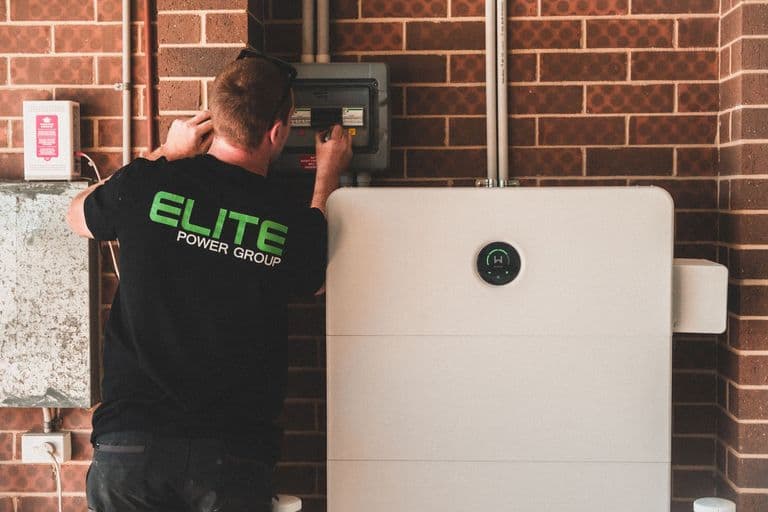
Hungary's OETP storage grants: what to do by 26 February 2027
Since 12 October 2026, applicants with passed status in Hungary's Otthoni Energiatároló Program (OETP), a home energy storage subsidy scheme, have been able to file their verification requests, with a deadline of 16:00 on 26 February 2027. The request must include the required documents and a works contract generated in the application system and signed with the installer. We explain what to upload, who handles which step, how a project reaches payment, and how to avoid missing the deadline.

How Much Do Solar Panels Produce in Winter? Realistic Numbers
Winter output from a rooftop solar system is a fraction of the summer peak: shorter days, a low sun, cloud and snow mean that the four darkest months together typically deliver only around a tenth to a fifth of the annual yield, depending on latitude. This guide sets realistic month-by-month expectations, explains what winter means for self-consumption and your bill, shows how a battery and smart scheduling help, and why you should never size a system for December.
Heat Pump, Solar & H Tariff: How to Plan Together
Combining a heat pump, rooftop solar panels and a preferential electricity tariff can significantly cut household energy bills — but only if you plan all three as one integrated system. This guide walks through the decision logic, common mistakes and key considerations for homeowners.
Solar PV in the Arctic: Svalbard's surprising potential
Researchers at Norway's SINTEF have found that solar PV in Longyearbyen, one of the world's northernmost inhabited settlements, can achieve capacity factors comparable to central European cities during summer. The study shows that PV, combined with wind and storage, could play a pivotal role in the Arctic energy transition.
Comments
0 commentsBe the first to comment.