
Hungary's Otthoni Energiatároló Program (OETP, Home Energy Storage Programme), a state subsidy scheme for residential batteries, opened its verification phase for winning applicants at 10:00 on 12 October 2026. In this phase, applicants with the status megfelelt (passed) must file a verification request together with the required documents and a works contract generated in the application system and signed with their chosen installer. Under the current call for applications dated 28 September 2026, requests can be submitted until 16:00 on 26 February 2027 on the otthonienergiatarolo.neuzrt.hu platform of Nemzeti Energetikai Ügynökség Zrt. (NEÜ Zrt., Hungary's national energy agency), using Ügyfélkapu+ or DÁP, the government's digital identification services. The programme is funded by the Gazdasági és Energetikai Minisztérium (Ministry of Economy and Energy), while NEÜ Zrt., which administers it, published two further guides on 27 October 2026, a practical guide for installers and a procedural guide on issuing bank guarantees. Based on the rules known at the time of writing in late October, this explainer covers what needs to be done by the deadline, who is responsible for each step and how a project reaches payment, although the binding conditions are always those set out in the official call and its annexes.
Who is the verification phase for, and what must be submitted?
Only applicants holding the megfelelt status in the application system may file a verification request, and only after being notified by the funding body: according to the call, this happens in ranking order and depending on the available funds, with the notification stating when, under what conditions and by what deadline the request can be submitted. Of roughly 132,000 applications received in the first round, around 42,000 were successful, and according to the responsible minister's announcement in parliament on 21 September 2026, some 15,000 more may receive support, which could raise the number of subsidised households to about 57,000. Applicants with submitted status who have not yet received a decision may get a chance as funds are freed up, but no official source states exactly who will be notified and when. The 26 February date is the deadline for submitting the verification request and the signed works contract attached to it, not for completing the installation, even though some news reports described it as a construction deadline. The call of 7 April 2026 still listed 30 September 2026 as the submission deadline, but that version is outdated, so if an installer or adviser website still quotes it, the current call prevails.
According to the call, the documents to upload include the applicant's address card, tax identification card, a full certified land registry extract no older than 30 days, and the pages of the electricity bill for the latest billing period that show the metering point identifier (POD). Applicants must also prove that a request to install or modify a háztartási méretű kiserőmű (HMKE, a household-scale small power plant) has been submitted to the electricity service provider. Mandatory annexes further include the works contract with a cost budget generated in the application system and a declaration on economic activity, while a declaration of own contribution is needed if the project's total cost exceeds the cap of the relevant target area, namely HUF 2.5 million in target area 1, which covers new solar systems with storage, and HUF 1.8 million in target area 2, which upgrades an existing HMKE with storage and an inverter. A certificate of no public debt from NAV, the Hungarian tax authority, no older than 30 days, is only required if the applicant is not listed in the database of taxpayers free of public debt, and depending on the case further annexes may be needed, such as a declaration by a co-owner, usufructuary or guardian, a condominium resolution or a permit. Only one verification request can be submitted per residential property.
Who does what, and how do installation and payment work?
The verification request is recorded and submitted by the applicant or their authorised representative, while the installer provides professional consultation and checks; an installer may act as the representative only with a power of attorney following NEÜ's template and countersigned by two witnesses, and even then may only change the technical or financial content after informing the applicant in advance and obtaining their explicit consent. The work may only be carried out by an installer whose registration has been approved by the funding body, and a continuously updated list of these installers is available in the application system; self-installation is not eligible, and the applicant is responsible for the installer they choose. Through the system, applicants can send a contact form to up to three registered installers, but this does not yet link them: the installer must confirm the applicant's pairing request on the platform within 72 hours. Only a works contract generated in the application system and signed by both parties is accepted, and it only enters into force once the verification request has been approved and the grant certificate has taken effect. According to the installer guide, no side agreement amending or supplementing this contract may be concluded for the subsidised activity, and strict rules govern how it is signed; on the installer's side, for example, the DÁP eSignature (DÁP eAláírás) and simple, non-qualified electronic signatures are not accepted.
If the verification request is approved, the funding body issues a grant certificate (támogatói okirat), which takes effect on issue and from which there are at most 24 months to complete the investment; the date of the document issued or confirmed by the distribution system operator (DSO) must also fall within this period. Work may start after the successful application phase, even before the grant certificate, at the applicant's own risk, but this brings no advantage in the assessment, and if the request is rejected, no new verification request can be filed for the same investment; according to NEÜ's notice of 6 October, a target area 1 applicant who has already installed solar panels at their own expense can still submit the request, and the funding body will decide on any change of target area during the assessment, based on information requested from the DSO. By law, the intention to commission a stationary storage unit with a nominal capacity above 2 kWh must be reported to the DSO together with its basic technical data, and the completion of the work must also be reported to the DSO in every case, with the installer also recording the completion report in the application system. Once the verification request has been submitted, the technical and financial content of the investment can only be changed through a procedure to amend the grant certificate. If the investment is not completed within the deadline, the funding body may revoke the certificate and reclaim the support paid, increased by transaction interest of twice the central bank base rate, and the completed system must be kept at the site for 3 years from the acceptance of the final payment request.
The grant can cover 100 per cent of the actual cost, up to HUF 2.5 million in target area 1 and HUF 1.8 million in target area 2, and there are two ways for it to be paid out. An advance is only paid at the beneficiary's separate request and only if the installer provides a bank guarantee in favour of the funding body for the same amount as the advance; in that case the advance is uniformly 100 per cent of the subsidy content of the works contract, it goes directly to the installer through assignment, and the applicant does not have to provide any security. The advance is transferred to the installer's bank account within 30 days of the approval of the advance request, provided the beneficiary has a certificate of no public debt no older than 30 days or is listed in NAV's database of debt-free taxpayers; in the post-financed option without an advance, no bank guarantee is needed, and after completion the funding body transfers the amount of the installer's final invoice, up to the cap of the target area, to the installer through assignment. If the contract price exceeds the gross cap of HUF 2.5 or 1.8 million, the installer may issue no more than one partial invoice for the excess when reporting completion to the DSO, which the client pays from own funds within 10 days of receiving it, and registered installers undertake not to ask the beneficiary for any further advance beyond the approved one. The final payment request must be submitted no later than 30 days after the final invoice is issued, as missing this deadline may lead to an irregularity procedure and repayment of the grant.
How to avoid missing the deadline
Although 26 February may seem far off, some of the annexes take time: proof that the HMKE request has been submitted to the service provider is already required in the verification request, the works contract must be generated in the application system and signed by both parties, and the land registry extract and, where needed, the NAV certificate cannot be older than 30 days, so it makes sense to obtain these in line with the planned submission date. It is advisable to secure an installer as early as possible, because under the installer registration call of 28 September 2026, registered companies undertake to sign only as many contracts as they can demonstrably fulfil with their staff, equipment and time, and if many winners aim for the same few months, surveys and installations could become congested in winter, when the weather can also slow down rooftop work. According to NEÜ's notices of 28 September and 12 October, every verification request filed by the deadline will be assessed regardless of the order of submission, and since the funding is available, every approved application will receive support, which is why the agency asks applicants to make use of the full submission period; at the same time, the call states that requests are processed continuously in order of receipt, missing documents can be supplied only once within a deadline of no more than 7 days, and clarification questions allow no more than 5 days. There is therefore no need to rush, but because gaps can only be filled once, it is worth going through the technical content, costs and annexes with the installer before submitting, and agreeing in advance on how the contract will be signed. If anything is unclear, the OETP customer service can be reached by phone at +36 1 755 5938 and by email at lakossagitarolo@neuzrt.hu.
Several important details are still unknown: there are no public figures on how many applicants have received the megfelelt status so far or how many verification requests have been filed since 12 October, it is not known when the first grant certificates will be issued or when the interface for advances and payments will open, and the text of the current call does not make clear whether the 24-month implementation deadline can be extended. Nor has it been officially clarified how the funding for the additional round of around 15,000 applicants fits with NEÜ's notices and the funding-dependent wording of the call; according to the responsible minister's statement of 21 October 2026, the programme's expenditure due in 2027 will be covered from next year's budget, but this is only a plan for now, as the 2027 budget has not yet been adopted. It is therefore worth following NEÜ's official news, clarifying open questions directly with the customer service, and scheduling the steps together with the installer, with the agreements recorded in writing. If you are still looking for an installer or need help surveying and sizing the planned solar and storage system, it is worth turning to a local, independent specialist installer from the registered list, who can assess the property during an on-site survey.
Related articles

How Much Do Solar Panels Produce in Winter? Realistic Numbers
Winter output from a rooftop solar system is a fraction of the summer peak: shorter days, a low sun, cloud and snow mean that the four darkest months together typically deliver only around a tenth to a fifth of the annual yield, depending on latitude. This guide sets realistic month-by-month expectations, explains what winter means for self-consumption and your bill, shows how a battery and smart scheduling help, and why you should never size a system for December.
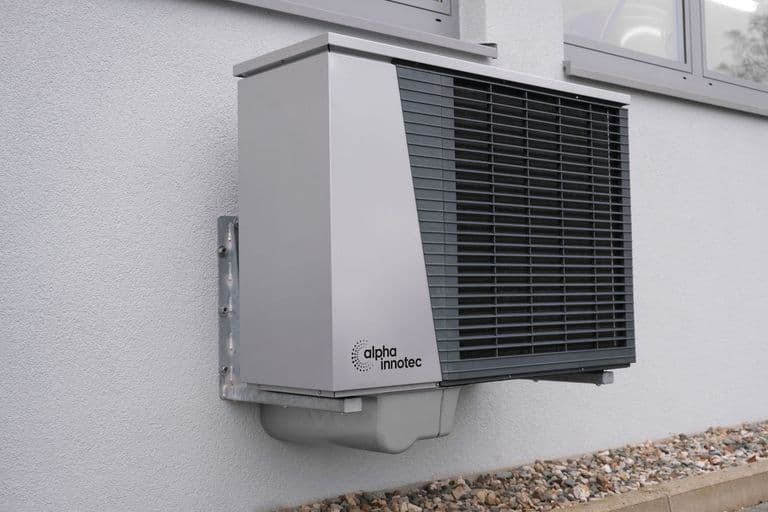
Heat Pump, Solar & H Tariff: How to Plan Together
Combining a heat pump, rooftop solar panels and a preferential electricity tariff can significantly cut household energy bills — but only if you plan all three as one integrated system. This guide walks through the decision logic, common mistakes and key considerations for homeowners.
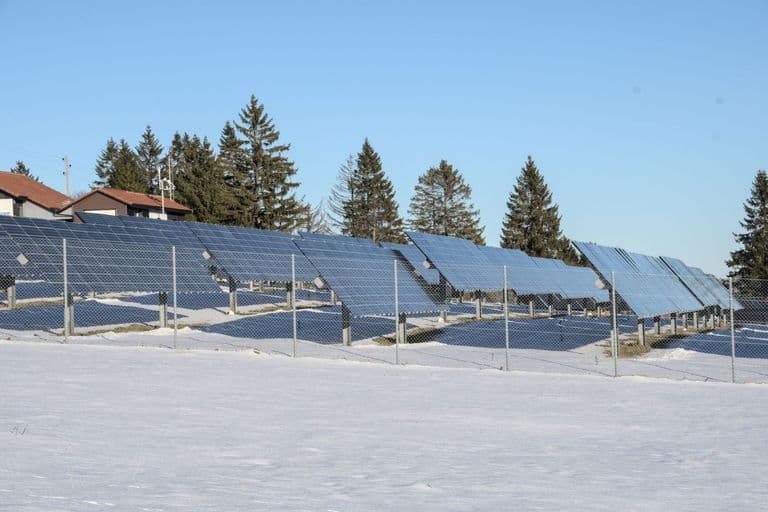
Solar PV in the Arctic: Svalbard's surprising potential
Researchers at Norway's SINTEF have found that solar PV in Longyearbyen, one of the world's northernmost inhabited settlements, can achieve capacity factors comparable to central European cities during summer. The study shows that PV, combined with wind and storage, could play a pivotal role in the Arctic energy transition.
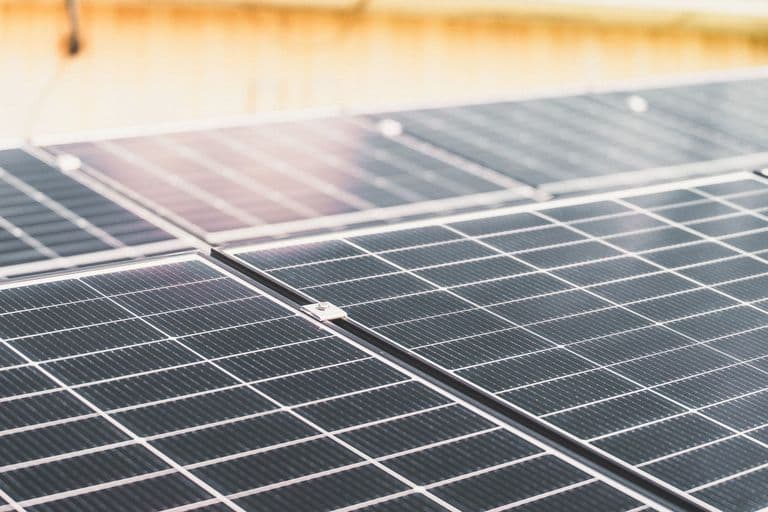
Solar + Heat Pump: When Do They Really Cut Your Bill?
Combining rooftop solar with an air-source heat pump seems like a perfect match, but real savings depend on how well their operating hours overlap. This guide explains the key decision factors for homeowners considering both systems.
Comments
0 commentsBe the first to comment.