
Hungary's Otthoni Energiatároló Program (OETP, Home Energy Storage Programme) entered its verification phase at 10 a.m. on 12 October 2026, and applicants whose applications were rated compliant can submit their verification application until 4 p.m. (16h) on 26 February 2027. One mandatory attachment to that application is the works contract concluded with the contractor and generated from the application system, which makes choosing a contractor one of the most important decisions successful applicants now face. On 27 October 2026 the body running the programme, the Nemzeti Energetikai Ügynökség (NEÜ, National Energy Agency), published two new documents: a Practical Guide for Contractors dated 22 October 2026 and a Procedural Guide on Issuing the Bank Guarantee dated 26 October 2026. Drawing on these and on the call for applications in force, dated 28 September 2026, this article summarises what to look out for, reflecting the situation known at the time of writing at the end of October. By its own definition the contractor guide is for information only, while the binding rules are set out in the call and its annexes, so these are what count whenever a question is disputed.
Why the choice of contractor carries so much weight
Under the call, the investment may only be carried out by a contractor whose registration has been approved by the funding body; self-installation is not eligible, and the applicant is responsible for the contractor they choose. The continuously updated list of registered contractors is available in the application system, where applicants can send a contact form to up to three contractors, although this does not yet link them to a contractor: the contractor has to confirm the applicant's linking request on the platform within 72 hours. The stakes are high because the project must be completed within 24 months of the grant deed (támogatói okirat) taking effect, and if it is not, the funding body may revoke the deed and reclaim the grant already paid, increased by contractual interest equal to twice the central bank base rate. According to the contractor registration call of 28 September 2026, contractors undertake to sign only as many contracts as they can demonstrably fulfil with their staff, equipment and time, so it is worth asking when they promise to carry out the on-site survey and the installation. The verification application is recorded and submitted by the applicant or their authorised representative; if this task is handed to the contractor, it may act only under a power of attorney that follows the NEÜ template and is countersigned by two witnesses, and it may change the technical or financial content only after informing the applicant in advance and with their express consent.
Who gives a bank guarantee to whom, and what it means for applicants
The grant can reach the contractor under two arrangements. If the applicant requests an advance in a separate application, the advance amounts to a uniform 100 per cent of the grant content of the works contract and is paid directly to the contractor by assignment, but only if the contractor provides a bank guarantee for the same amount in favour of the funding body, the NEÜ; the applicant submits the advance request, which includes the contractor's pro forma invoice, while the contractor uploads the guarantee to the application system no later than the submission of that request. The applicant therefore does not have to provide any security, as the call waives this requirement for beneficiaries, and the bank guarantee protects the funding body: if the project falls through and neither settlement nor repayment takes place within 30 days of the funding body's notice, it can call the guarantee. The advance is transferred to the contractor's bank account within 30 days of the advance request being approved, provided the applicant holds a certificate of no public debts not older than 30 days or is listed in the debt-free taxpayer database of NAV, the Hungarian tax authority. Without an advance no bank guarantee is needed either: in this post-financed arrangement, after completion the funding body transfers the amount of the contractor's final invoice to the contractor by assignment, capped at 2.5 million forints in target area 1 (a new household-scale small power plant, known in Hungary as HMKE, with solar panels and storage) and 1.8 million forints in target area 2 (upgrading an existing HMKE with storage and an inverter), which means the contractor typically pre-finances the cost of the work until payment arrives.
According to the bank guarantee guide, only an unconditional, irrevocable guarantee payable on first demand, issued in forints and electronically signed by the bank, is acceptable; suretyships, security deposits or guarantee commitment declarations are not, and clauses restricting a call are also prohibited, for example a 61-day survival clause for the event of liquidation. The guarantee may cover a single project or take the form of a group guarantee covering several projects, and it must remain valid from the date of issue until 30 November of the calendar year following the year of issue; if the advance has not been settled by then, the contractor must submit an extended guarantee at least 40 days before expiry, and if it fails to do so, it has to repay the entire advance. An important change is that the 28 September amendment deleted the separate bank guarantee for a commitment previously required from contractors, so a guarantee is now needed only when an advance is requested, for the same amount as the advance. In practice, one of the first questions for any contractor should therefore be whether it will take on the job with an advance or on a post-financed basis, and if with an advance, whether its bank can issue a guarantee that meets the conditions above. A well-prepared company will give a concrete answer and can also explain how issuing the guarantee fits into the installation schedule.
What to check in the quote and the contract
Applicants should ask for a quote with an exact equipment list including manufacturers and models, because the technical conditions are strict: the storage unit must have a nominal capacity of at least 10 kWh (with a 10 per cent downward technical tolerance), and the system must be remotely controllable via a standard or manufacturer interface. The storage may only be connected to the direct current (DC) side of the solar system, on a shared hybrid inverter; AC-side connection is not eligible, and the battery's nominal voltage must be at least 100 V unless it is the inverter manufacturer's own product. In target area 1 the inverter may be rated at no more than 5 kW and the solar panel capacity may be at most 120 per cent of the inverter's output, while in target area 2 the inverter output may exceed the capacity set in the grid connection contract by no more than 1 kW. Where storage is added to an existing solar system, the quote should make clear how the existing panel array will be connected to the hybrid inverter, because in target area 2 buying, replacing or expanding panels is not possible even at the applicant's own expense, and replacing or expanding an existing storage unit, or adding a new one alongside it, is not eligible either. If an old inverter or other equipment received support from another programme and is still under a maintenance obligation, the call warns that replacing it may trigger repayment of that support, so this needs to be clarified before the contract is signed.
The only acceptable contract is the works contract generated from the application system and signed by both parties; it must match the data entered on the application datasheet in every respect, and it takes effect only once the verification application has been approved and the grant deed has entered into force. No side agreement amending or supplementing it may be concluded for the supported activity; work outside the project, such as work relating to the safety compliance of the existing system, can be covered by a separate contract, but its cost cannot be charged to the programme, so applicants should ask in advance whether any such item will arise in their case and what it will cost. The contract can be signed on paper, with a qualified electronic signature or as separately signed counterparts, but on the contractor's side the DÁP eAláírás (the e-signature of Hungary's state digital citizenship app) and simple DocuSign or Adobe Sign signatures are not accepted, nor is a copy signed on paper by one party and electronically by the other. Deadlines and responsibilities also need to be agreed: the date of the document issued or confirmed by the distribution system operator (DSO) must also fall within the 24-month implementation period, the planned commissioning of a stationary storage unit larger than 2 kWh must be notified to the DSO, and completion of the installation has to be reported as well, so it should be clear who handles each of these steps. Since the system has to be maintained on site for 3 years from the approval of the final payment request, the terms of the manufacturer's warranty and the contractor's workmanship warranty, as well as the availability of service, matter at least as much as the price.
It is a red flag if the contractor asks for a further advance on top of the approved one, since registered contractors undertake precisely not to do so, and equally if it wants the applicant's own contribution above the cap paid up front or in several instalments: according to the contractor guide, at most one partial invoice may be issued for this, at the time completion is reported to the DSO, and the applicant must pay it from own funds within 10 days of receiving it. Vague technical content is another warning sign, for instance when the quote does not state the storage unit's nominal capacity, the inverter model or remote controllability, and so is an offer of a separate agreement for the supported work alongside the generated contract: under the contractor guide such an agreement cannot be concluded, and according to a NEÜ notice of 4 March 2026 it can lead to suspension from the contractor list. Unrealistic promises also call for caution, for example that the application is certain to be approved, that early submission improves the chances, or that the technical content can easily be rewritten later: according to the funding body's notices and the contractor guide, the order of submission does not affect the assessment (the call does state that applications are processed continuously in order of receipt, but this describes the processing workflow, not an assessment criterion), and after submission the technical and financial content can only be changed in the procedure for amending the grant deed. As the Hungarian business news site Portfolio reported on 15 October 2026, Ádám Szolnoki, president of the industry association Manap, warned applicants not to choose the cheapest offer or packages that some firms advertise as free, but to check the installer's background and the manufacturer's service network in Hungary or Europe. Caution is also warranted if a quote still works with the earlier submission deadline of 30 September 2026 or a uniform cap of 2.5 million forints, as both have been outdated since the 28 September amendment.
Finally, on timing: the funding body has said it will assess every verification application submitted by the deadline and explicitly asks applicants to use the full submission period, so there is no need to rush, though there is no point in putting things off either. By the 26 February 2027 deadline, applicants have to choose a contractor, sign the contract generated from the system and gather the other attachments, including a full certified land registry extract not older than 30 days and proof that the application to establish or modify the HMKE has been submitted to the electricity service provider, while contractors' capacity is limited and winter can also slow down site surveys. Work may begin before the grant deed is issued, but only at the applicant's own risk: this brings no advantage in the assessment, and if the application is rejected, no new verification application can be filed for the same investment. Anyone still looking for a contractor would do well to request quotes from independent local specialist installers that base their offer on an on-site survey. Whoever is chosen, the registration should be checked on the contractor list in the application system, the final conditions should be taken from the official call and guides, and questions can be directed to the programme's customer service (+36 1 755 5938, lakossagitarolo@neuzrt.hu).
Related articles
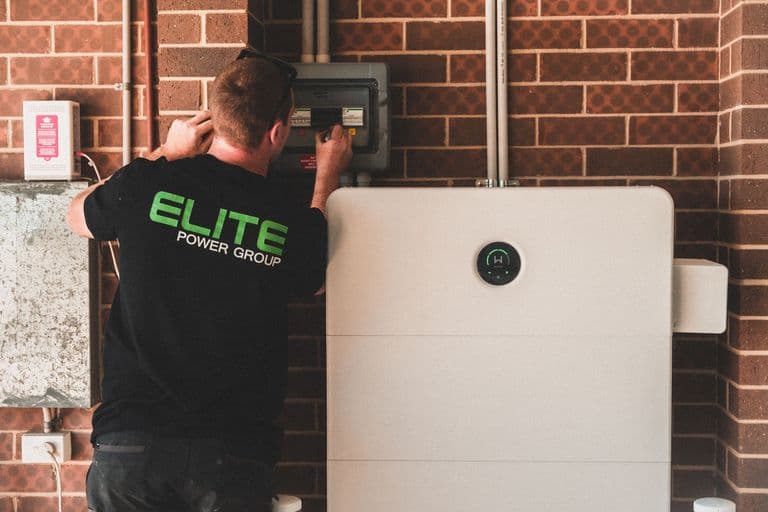
Hungary's OETP: phase 2 on hold, 15,000 more may get support
The second phase of Hungary's Otthoni Energiatároló Program (OETP), a subsidy scheme for home battery storage, was suspended on 16 March 2026, before it had even opened, and the suspension was still in force at the end of October, when this article was written. Of the roughly 132,000 applications in the first phase, about 42,000 won, and in September it was announced that around 15,000 more applicants could receive support. We explain what this means for those waiting for the supplementary round and for those left out, what is known about the announced new calls, and what to watch out for if you are considering a self-financed battery.
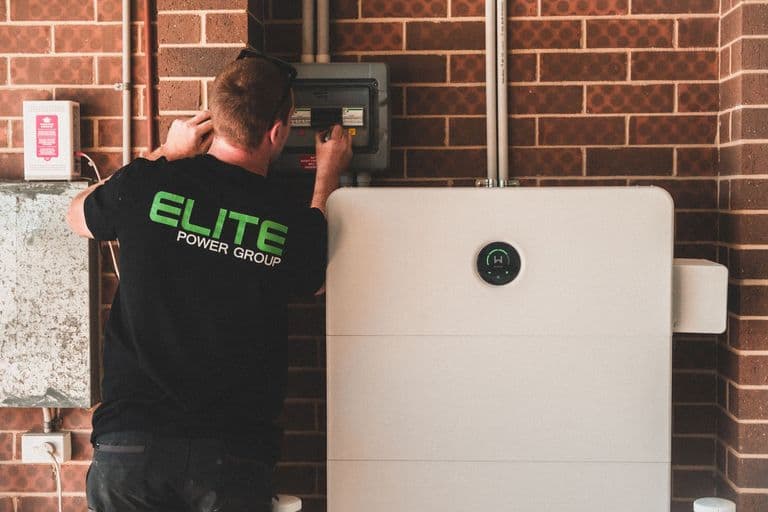
Hungary's OETP storage grants: what to do by 26 February 2027
Since 12 October 2026, applicants with passed status in Hungary's Otthoni Energiatároló Program (OETP), a home energy storage subsidy scheme, have been able to file their verification requests, with a deadline of 16:00 on 26 February 2027. The request must include the required documents and a works contract generated in the application system and signed with the installer. We explain what to upload, who handles which step, how a project reaches payment, and how to avoid missing the deadline.

How Much Do Solar Panels Produce in Winter? Realistic Numbers
Winter output from a rooftop solar system is a fraction of the summer peak: shorter days, a low sun, cloud and snow mean that the four darkest months together typically deliver only around a tenth to a fifth of the annual yield, depending on latitude. This guide sets realistic month-by-month expectations, explains what winter means for self-consumption and your bill, shows how a battery and smart scheduling help, and why you should never size a system for December.
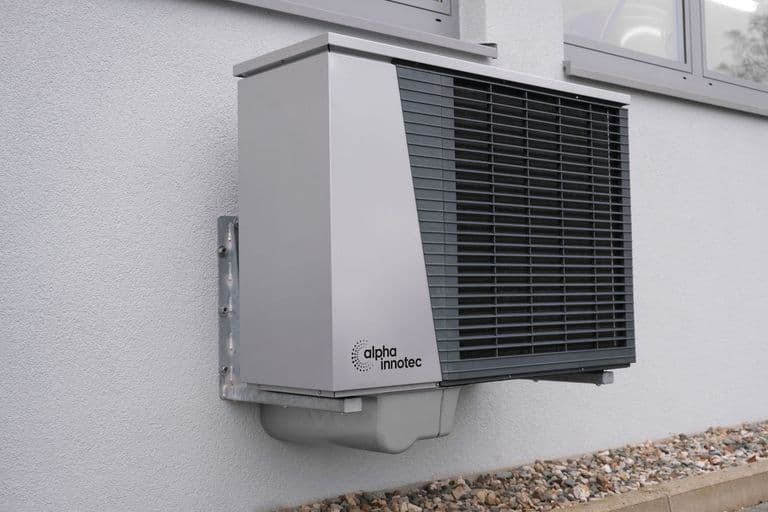
Heat Pump, Solar & H Tariff: How to Plan Together
Combining a heat pump, rooftop solar panels and a preferential electricity tariff can significantly cut household energy bills — but only if you plan all three as one integrated system. This guide walks through the decision logic, common mistakes and key considerations for homeowners.
Comments
0 commentsBe the first to comment.