
Hungary has announced a new energy renovation scheme for homes in which the way the works are planned can decide whether part of the money has to be paid back at all. The Wekerle Plusz programme (Wekerle+ in official documents), presented at a government press conference on 27 October 2026, includes a part for family houses, the Családi Ház Program (Family House Programme), which starts in February 2027 and offers loans of up to HUF 15 million at a fixed annual interest rate of 3 percent with a 15-year term. Part of the loan can become non-repayable, but only if the renovation measurably reduces the energy use of the building. The starting point is therefore not a single device but the question of which measures, and in which order, make up a working renovation package. This article explores that technical and economic planning logic, as the detailed rules and the call for applications had not yet been published at the end of October, when it was written.
Why the whole house matters under Wekerle Plusz
The non-repayable support requires a primary energy saving of at least 30 percent, which has to be demonstrated by comparing the energy performance certificate issued before the renovation with the one issued after it. The share of support also depends on the starting rating: for houses rated D to G, 30 percent of the loan amount is non-repayable, for H to I it is 50 percent, while family houses rated A to C are only entitled to the preferential loan. The non-repayable part is not paid out as freely spendable cash but deducted from the outstanding loan principal as an early repayment, and the costs must be backed by invoices. What counts is therefore the energy balance of the entire building rather than the contribution of any single element, so the initial certificate can also serve as a planning tool by helping to reveal where the house loses the most energy. According to what was said at the press conference, 70 to 80 energy advisors across the country will support applicants from the beginning of the process to the end.
In what order should the renovation proceed?
The established logic in the profession is to cut heat loss first, for example by insulating the facade and the attic floor and by replacing windows and doors. The reason is simple: energy the building does not lose does not have to be produced again, and a house with a lower heat demand usually needs a smaller heating system that is cheaper to run. If the heating is replaced first, the new heat generator may be sized for the current high heat demand and end up oversized once the insulation is done later. In the Family House Programme, besides insulation, window replacement and the modernisation of lighting and shading, the costs of design, the technical supervisor and application advice are also eligible, so money spent on planning is not an extra but can be an eligible part of the package.
Heating comes second. The programme supports heat pumps, efficient split air conditioners, upgrades to domestic hot water systems and thermostatic radiator valves, but neither the family house programme nor the one for apartment buildings offers support for installing or replacing a gas boiler. The heat pump can often play a decisive role in the savings, because by using ambient heat it typically delivers considerably more heat than the electricity it consumes, so replacing fossil-fuel heating can substantially improve the primary energy balance. It works most efficiently when it can keep the house warm at a low flow temperature, which is why heat emitters such as underfloor heating or larger radiators are worth thinking through together with it. This is where insulation comes back into the picture, since a well-insulated house may get by with a lower heating water temperature.
How much goes to solar, and why is it not enough on its own?
In the usual sequence, renewable generation, meaning solar panels and possibly a battery, comes last, because the system is best sized to the electricity demand after the renovation, which typically looks quite different once a heat pump has been installed. Solar panels are eligible in the programme, but only to a limited extent of up to 20 percent, and the basis of that cap is still unclear: the official programme website refers to at most 20 percent of the support, while reports by the Hungarian news agency MTI and the news sites Telex and Portfolio speak of 20 percent of the HUF 15 million loan limit for family houses, or a maximum of HUF 3 million. If the cap applies to the non-repayable part, then with a HUF 15 million loan the amount for solar could reach at most HUF 1.5 million for an H to I rating and at most HUF 0.9 million for a D to G rating, although the detailed rule is not yet known. There is also a technical reason why solar is not the backbone of the package: own generation can improve the energy balance of the building but does nothing about heat loss, so in a poorly insulated house with an old heating system the energy needed for heating remains just the same.
What the final Wekerle Plusz call has yet to clarify
Several questions that directly affect planning remain open. Energy storage appears neither in the government announcement of 27 October nor among the eligible items on the official programme website, yet it is not explicitly excluded either, and there is no official information on whether the programme can be combined with the Otthoni Energiatároló Program (Home Energy Storage Programme) or with other renovation schemes already in operation. It is also unknown what happens if the post-renovation certificate does not confirm the 30 percent saving, when the non-repayable part will be credited, how much the certificates will cost, and how exactly the own contribution of 5 percent on top of the loan amount, capped at HUF 500,000, will be calculated. The upgrading of heat emitters, such as replacing radiators or installing underfloor heating, is not listed separately on the official programme website, so this point should also be checked in the call. In the meantime, a survey of the whole building and a draft of a phased renovation plan can be useful regardless of the final rules, although it is the call that will determine in what form and when the certificates have to be prepared.
The logic of the sequence also means that the solar part can be sized most accurately once it is clear which heating system the house will use and what its heat demand will be. For planning insulation and heating it is worth relying on an energy specialist, while precise information on the application conditions will come from the official programme materials and from the call once it is published. For surveying, sizing and installing the solar and storage part, a local, independent specialist installer can help on the basis of an on-site assessment.
Related articles
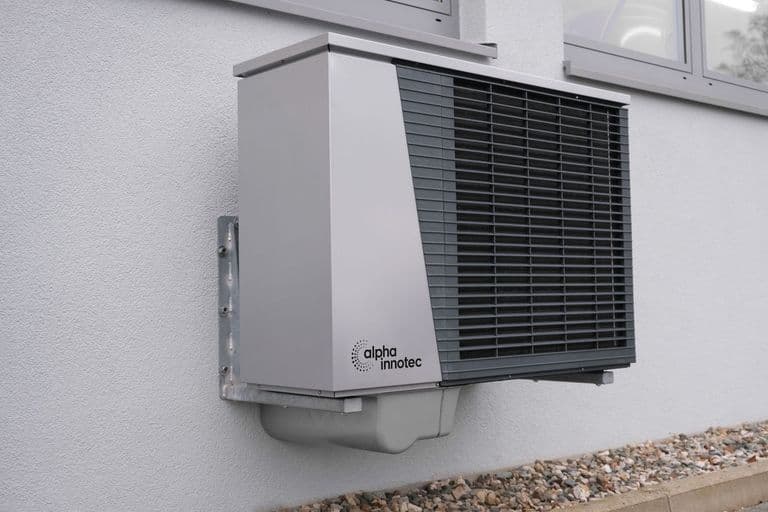
Wekerle Plusz 2027: Hungary's home energy renovation scheme
Under the energy renovation part of Hungary's Wekerle Plusz programme, owners of family houses will be able to take out a loan of up to 15 million forints at a fixed annual interest rate of 3 percent from February 2027, with 30 or 50 percent of it non-repayable for buildings with poorer energy ratings, provided the renovation delivers primary energy savings of at least 30 percent. We explain who can apply, what is eligible, where solar panels and gas boilers stand, what was still open at the end of October and what is worth doing now.

Pre-Season Heat Pump Checklist: What to Check in September
A heat pump does most of its work in the coldest months, but how much electricity it burns doing so is largely decided in September. Here is what homeowners can check themselves, from the outdoor unit to the heating curve, what to leave to a qualified engineer, and how to get the most out of rooftop solar in the autumn months.
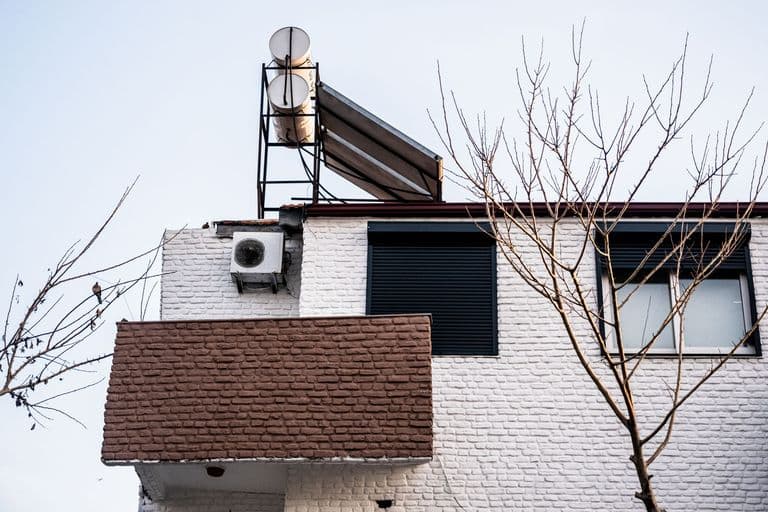
Air conditioning on solar power: what summer cooling really costs in 2026
In a heatwave, air conditioning becomes one of the biggest loads in a household — exactly when solar panels produce the most. We look at what cooling costs with and without solar, how much extra capacity you need, and what to watch for when sizing a system.
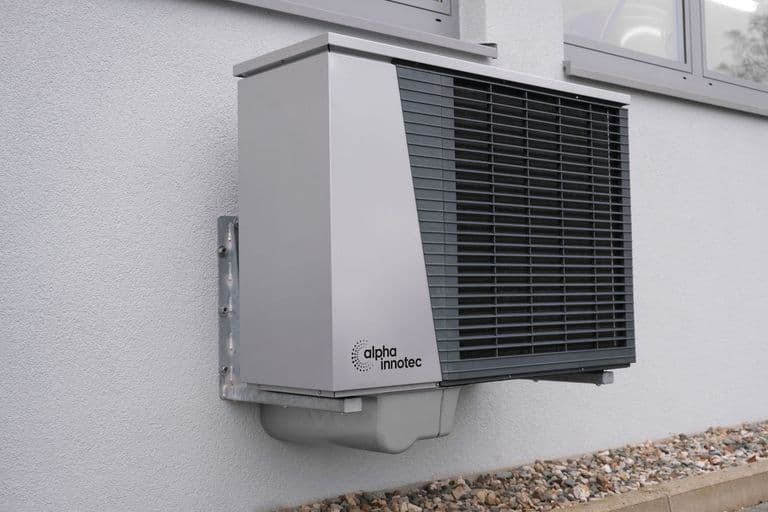
Heat Pump, Solar & H Tariff: How to Plan Together
Combining a heat pump, rooftop solar panels and a preferential electricity tariff can significantly cut household energy bills — but only if you plan all three as one integrated system. This guide walks through the decision logic, common mistakes and key considerations for homeowners.
Comments
0 commentsBe the first to comment.