
Hungary is rolling out a new set of state-backed home finance schemes, and for many families planning an energy upgrade the hardest question is not the technical scope but how to pay for it, since such costs rarely fit into a monthly household budget. The Wekerle programme, presented at a government press conference on 27 October 2026, brings several financial tools at once: a new home loan went live on 28 October, state support for the lakástakarék home savings scheme returns from January 2027, and an energy renovation loan for family houses starts in February 2027. According to the government, HUF 633 billion in EU funds will be available for modernising homes between 2027 and 2030. Below we look at what each scheme is designed for and how they can be combined to finance a renovation, based on the information available at the end of October.
What is the Wekerle loan, and can it pay for a renovation?
The product referred to here simply as the Wekerle loan, and in the press as the Wekerle Plusz home loan, is officially called the Wekerle+ Vásárlási és Építési Hitel (Wekerle+ Purchase and Construction Loan); it launched on 28 October 2026 as the successor to the Otthon Start scheme, under Government Decree 298/2026. (X. 27.), published in the Magyar Közlöny, Hungary's official gazette, on 27 October. People aged 18 to 45 can borrow up to HUF 50 million to buy or build their first home, with up to 25 years of interest subsidy and a fixed customer rate of no more than 3 percent a year for new homes and construction and no more than 5 percent for used homes, while the property value limit is HUF 100 million in multi-unit buildings and HUF 150 million for single-unit houses. Erste Bank opened pre-registration on 29 October, which is not yet a loan application, and planned to start accepting actual applications the following week; meanwhile the outgoing Otthon Start can still be used temporarily for sale contracts signed by 31 October, provided the application is submitted to the bank by the final, non-extendable deadline of 15 November. From an energy perspective, the crucial detail is that, according to the programme's official website and an analysis of the decree by Bankmonitor, a Hungarian financial comparison site, the home loan carries no energy efficiency requirement and covers purchase and construction, not renovation. Upgrades are handled by a separate strand, the Wekerle+ Energetikai Felújítási Támogatás és Hitel (Wekerle+ Energy Renovation Grant and Loan), and there is as yet no detailed information on how the two schemes could be combined when renovating a house bought with a Wekerle loan.
How does the subsidised renovation loan work?
The Wekerle+ Családi Ház Program (Wekerle+ Family House Programme), aimed at family houses, terraced and semi-detached houses, and individually heated flats in buildings with few units, starts in February 2027 and offers loans of up to HUF 15 million at a fixed 3 percent annual interest rate over 15 years. Part of the loan is non-repayable, with the share depending on the home's energy rating before renovation: 30 percent for categories D to G and 50 percent for categories H to I, which on the maximum HUF 15 million loan means HUF 4.5 million and HUF 7.5 million respectively, while houses rated A to C receive only the subsidised loan. The non-repayable portion requires primary energy savings of at least 30 percent, verified by comparing the energy performance certificates issued before and after the works. Anyone may apply for a property of which they own at least half, regardless of age or place of residence, and there are no conditions relating to having children, marriage or family status.
An important detail is that the non-repayable portion is not paid out as freely spendable money: according to the programme's official website, it is deducted from the loan principal as a prepayment, with the costs documented by invoices and the savings by the two certificates. It is not yet known exactly when this credit will be applied or whether there will be any advance payment or pre-financing, so cautious planning should allow for repaying the full loan amount until then. On top of the loan, an own contribution of 5 percent, capped at HUF 500,000, is required, so according to a 21 October statement by the Minister for Economy and Energy a family house renovation of up to HUF 15.5 million can be carried out; the business daily Világgazdaság (VG) notes that it remains an open question how the HUF 500,000 cap applies to a HUF 15 million loan, where 5 percent would be HUF 750,000. According to Portfolio, a Hungarian business news site, and VG, the renovation loan will be available through an expanded network of MFB Pontok, the service points of the Hungarian Development Bank (MFB), in some cases with commercial banks involved, and 70 to 80 energy advisers across the country will guide applicants from start to finish. Condominiums and housing cooperatives get a separate interest-free scheme from March 2027, with loans of up to HUF 5 million per flat in brick buildings and up to HUF 4 million in prefabricated panel blocks, and an own contribution of HUF 200,000 per flat.
What does the home savings scheme offer, and how does the financing fit together?
The Wekerle+ Lakástakarék (Wekerle+ home savings scheme) brings back state support from January 2027, after it was discontinued in October 2018 according to Bankmonitor. In the first five years savers receive 10 percent of their deposits, up to HUF 120,000 a year, and in years six to ten 20 percent, up to HUF 240,000 a year, so the state contribution can reach a maximum of HUF 1.8 million over ten years. Support applies to deposits of up to HUF 100,000 a month, compared with a limit of HUF 20,000 a month under the old system, and the deposit rate is at least 3 percent a year. Besides buying or building a home, the savings can also be used for a home renovation that delivers energy savings. However, the legislation has not yet been published, so it is not known who can sign a contract, how many contracts qualify for support, what happens on early withdrawal, when the support is credited, or which institutions will offer the product.
For a family house renovation in 2027, the backbone of the financing is likely to be the subsidised loan and its non-repayable portion deducted as a prepayment, plus the mandatory own contribution. The programme supports a wide range of items, from insulation and window replacement through heat pumps to the costs of design, a technical supervisor and application consultancy, but anything outside its scope has to be paid from own funds or other financing; according to the official website, for example, installing or replacing a gas boiler is not eligible. The home savings scheme plays more of a long-term role, as the saving period is five to ten years and the state support builds up year by year, so a contract started in 2027 is more likely to fund a later phase of renovation than the own contribution for work done in 2027. There is currently no official information on whether the Wekerle+ renovation scheme can be combined with the Otthoni Energiatároló Program (Home Energy Storage Programme) or other home renovation schemes, so plans relying on several funding sources should wait for the detailed rules.
When comparing loans, the annual percentage rate of charge (THM in Hungarian) is usually more telling than the interest rate alone, because it also includes a large part of the loan's fees, but other charges are worth checking separately; for the Wekerle+ home loan, for example, Bankmonitor's analysis of the decree states that the prepayment fee is at most 1 percent of the amount prepaid and the fee for application and disbursement is at most HUF 30,000. For the same loan, the customer rate and the interest subsidy together come to half a percentage point above the average yield of five-year government bonds as published by the Államadósság Kezelő Központ (ÁKK, Hungary's Government Debt Management Agency); the customer pays no more than 3 or 5 percent of this, and the state covers the difference as an interest subsidy. A longer term typically means a lower monthly payment but more interest overall, and creditworthiness is assessed by the bank; according to the president of the Magyar Családi Ház Tulajdonosok Egyesülete (Hungarian Association of Family House Owners), quoted by the personal finance portal Pénzcentrum, low-income families living in homes in the worst condition may therefore miss out on the subsidised loan. No government decree or call for applications has yet been published for the renovation programme, so any concrete decision should rest on the final official conditions, the lender's written offer and, where needed, the advice of a financial professional.
If the renovation package includes solar panels, note that according to the programme's official website they can account for no more than 20 percent of the support, while some reports refer to 20 percent of the HUF 15 million loan limit, so the exact amount available will only become clear from the detailed rules. Battery storage is not listed among the eligible items either in the government announcement or on the programme website, so whether it qualifies remains open for now. For this reason, it makes sense to plan the size of the solar and storage components together with the overall financing plan, so that the system matches both the household's consumption and the available budget. A local, independent specialist installer can assess the solar and storage part during an on-site survey, so that once the final conditions are published the family can already plan with concrete technical content and costs.
Related articles
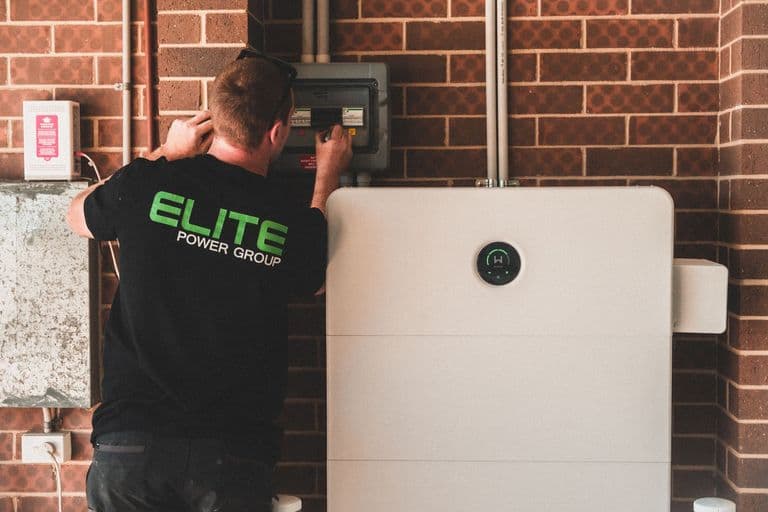
Hungary's OETP: choosing an installer, contract and guarantee
In the verification phase of Hungary's home energy storage subsidy programme, the Otthoni Energiatároló Program (OETP), successful applicants can only proceed with a contractor holding an approved registration and a works contract generated from the application system, and the verification application is due by 16h on 26 February 2027. This explainer sets out what the contractor and bank guarantee guides published by the Nemzeti Energetikai Ügynökség (NEÜ) on 27 October 2026 say: who gives a guarantee to whom for the advance payment, what to check in the quote and the contract, and which red flags to watch for.
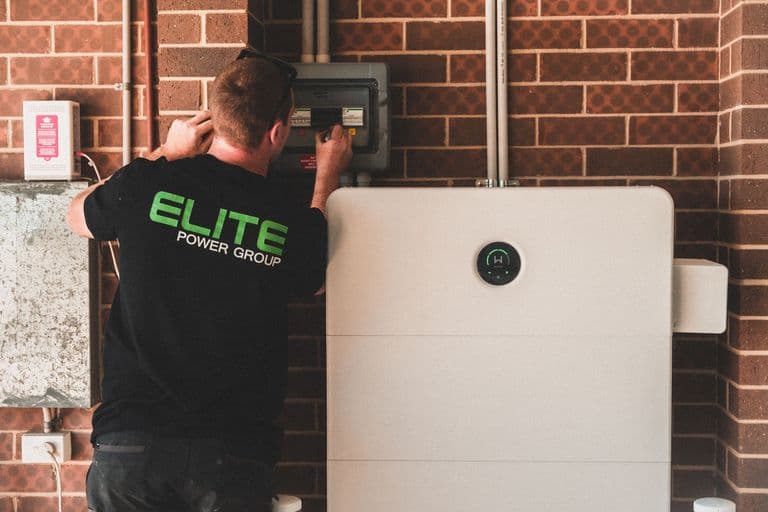
Hungary's OETP: phase 2 on hold, 15,000 more may get support
The second phase of Hungary's Otthoni Energiatároló Program (OETP), a subsidy scheme for home battery storage, was suspended on 16 March 2026, before it had even opened, and the suspension was still in force at the end of October, when this article was written. Of the roughly 132,000 applications in the first phase, about 42,000 won, and in September it was announced that around 15,000 more applicants could receive support. We explain what this means for those waiting for the supplementary round and for those left out, what is known about the announced new calls, and what to watch out for if you are considering a self-financed battery.
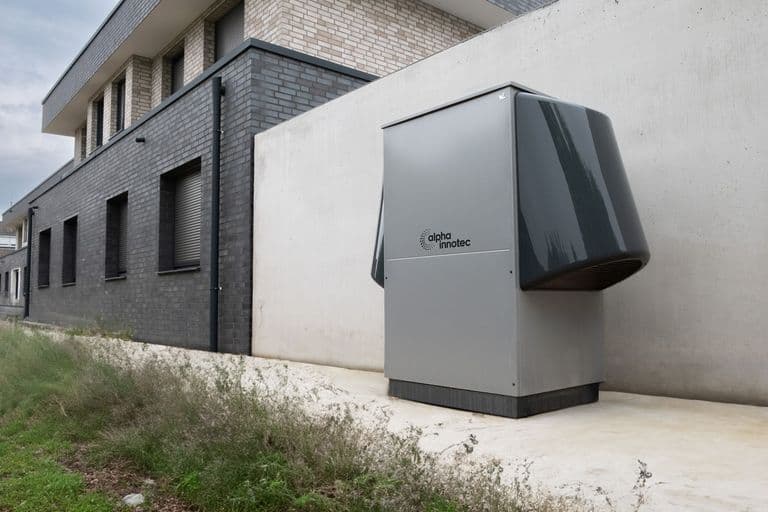
Wekerle Plusz 2027: insulation, heat pump or solar first?
Under the new Wekerle Plusz renovation scheme in Hungary, the non-repayable part of the support requires a primary energy saving of at least 30 percent, verified by comparing the energy performance certificates issued before and after the works, so the package is best planned for the whole building. We outline the usual professional sequence from insulation through the heat pump to solar panels, the still unclear cap on solar, and what the final call for applications has yet to clarify.
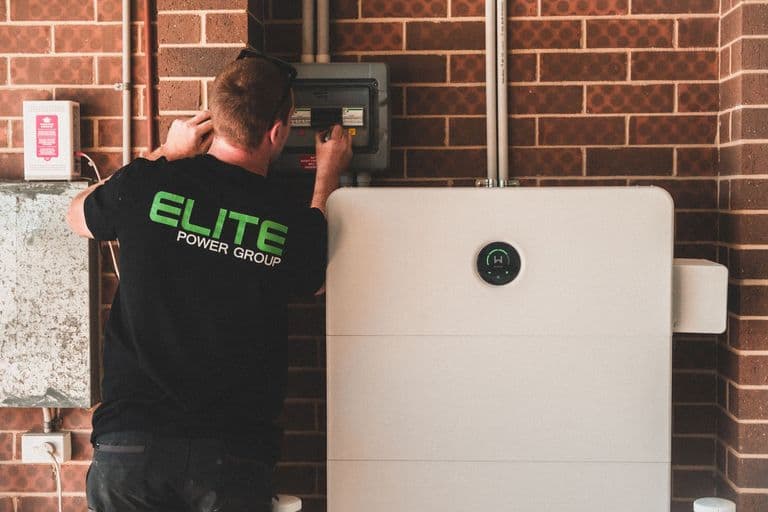
Hungary's OETP storage grants: what to do by 26 February 2027
Since 12 October 2026, applicants with passed status in Hungary's Otthoni Energiatároló Program (OETP), a home energy storage subsidy scheme, have been able to file their verification requests, with a deadline of 16:00 on 26 February 2027. The request must include the required documents and a works contract generated in the application system and signed with the installer. We explain what to upload, who handles which step, how a project reaches payment, and how to avoid missing the deadline.
Comments
0 commentsBe the first to comment.